
approx. 415 nm
Blue
Clearer-looking skinThe higher-energy end of the visible spectrum, and one of the most researched bands for blemish-prone, congestion-prone complexions. It works at the very surface of the skin.
Free shipping on all orders · 60-day money-back guarantee · Australian owned.
Salon-grade LED, designed for the look of clearer, calmer, brighter skin, a few minutes a day.
or 4 interest-free payments of $112.25 with
No UV. No mystery. Just specific wavelengths of light, delivered gently at home, and an honest look at what they do for the appearance of your skin.
Light is older than skincare. Humans have always understood, intuitively, that it does something to us: it warms, it lifts, it shifts something inside. What's new is our ability to isolate specific wavelengths and deliver them gently, without the UV that makes sunlight risky.
LED light therapy, sometimes called photobiomodulation, rests on a simple idea: skin cells respond to light at certain wavelengths. Delivered at the right intensity, research has explored how skin may respond in ways consistent with a more radiant, refreshed appearance. Many devices pair the light with gentle warmth and low-level microcurrent, so the ritual feels genuinely restorative rather than clinical.
The one word that matters most is consistency. A single session is relaxing; a daily ritual over several weeks is what the research into the modality keeps pointing back to.
Not all light does the same thing. Each band of the spectrum interacts with skin differently, which is why multi-wavelength devices layer them.
The higher-energy end of the visible spectrum, and one of the most researched bands for blemish-prone, congestion-prone complexions. It works at the very surface of the skin.
The most extensively studied wavelength in cosmetic light therapy, explored for its association with a rested, healthy-looking glow. It's the light most people picture when they think "LED".
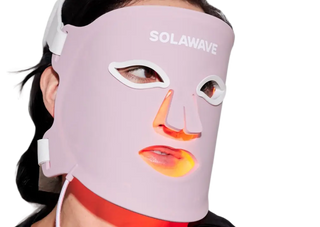
Just beyond what the eye can see, but skin absorbs it. Because it reaches more deeply than visible light, it's a common inclusion in full-face masks for an even, whole-surface session.
Sitting between red and yellow, amber is associated in the literature with a calm, soothed appearance, a gentle complement to the more energetic red and blue, especially for skin that looks reactive or flushed.
LED light therapy, red and near-infrared in particular, is one of the better-studied areas of cosmetic light science. A few honest things worth knowing before you start:
Consistent with published research into LED light therapy. Individual results vary.
Light therapy has a strong safety profile for most people, but a few situations are worth a pause and a chat with a healthcare professional first.
There isn't enough research on light therapy during pregnancy to confidently recommend it. If you're pregnant or trying to conceive, please speak with your doctor first.
Some medications, certain antibiotics, retinoids and acne treatments, can make skin more sensitive to light. If you're on prescription medication, check whether light therapy suits you.
If you have melasma, are prone to hyperpigmentation, or have a deeper complexion, introduce any device gradually: patch-test, start with the lowest setting and shortest session, and watch how your skin responds over a week.
Always close your eyes during a session and never point the device toward open eyes. If your device comes with protective eyewear, wear it.
This page is general information only and isn't a substitute for medical advice. If you have any concerns about whether light therapy is right for you, please speak with your doctor or a qualified dermatologist.
Five quiet minutes a day. Find the device that fits your routine.